
 |
 |
 |
 |
 |
 |
 |
 |
 |


May 2010
Stories Elsewhere
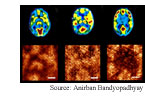 Molecular
computer mimics human brain, msnbc.com
Molecular
computer mimics human brain, msnbc.comMolecule-Sized Computer Mimics Human Brain At Work, Popular Science
(Source: Nature Physics paper Massively parallel computing on an organic molecular layer)
Top secret quantum messages for your room only, New Scientist
(Source: Physical Review A paper Location-dependent communications using quantum entanglement)
Sculpting a Nano 'World', Technology Review
(Source: Science paper Nanoscale Three-Dimensional Patterning of Molecular Resists by Scanning Probes)
Ultrathin Silk-Based Electronics Make Better Brain Implants, Wired
Brain Interfaces Made of Silk, Technology Review
(Source: Nature Materials paper Dissolvable films of silk fibroin for ultrathin conformal bio-integrated electronics )
Invisibility cloaks closer to living up to their name, Ars Technica
(Source: Nature Materials paper A single-layer wide-angle negative index metamaterial at visible frequencies)
Biting chemistry, spectroscopyNOW.com
(Source: Angewandte Chemie International Edition paper The Ouroborand: A Cavitand with a Coordination-Driven Switching Device)
Networked Networks Are Prone to Epic Failure, Wired
(Source: Nature paper Catastrophic cascade of failures in interdependent networks)
Nanotube 'fuzz' boosts optical performance, Physicsworld.com
(Source: Physical Review Letters paper Carbon Nanotubes in a Photonic Metamaterial)
HP claims big jump in computing design, San Francisco Business Times
(Source: Nature paper ‘Memristive’ switches enable ‘stateful’ logic operations via material implication)
FEATURES
View from the High Ground
Email conversations with researchers in high places.
How It Works
Get the nitty-gritty on nanotechnology, biochips, self-assembly, DNA technologies, quantum cryptography, and more.
Buy an ad link |

Blog RSS feed
Energy Research News
|
| "Physics
is to the rest of science what machine tools are to engineering. A
corollary is that science places power in our hands which can be used
for good or ill. Technology has been abused in this way throughout
the ages from gunpowder to atomic bombs." - John Pendry, Imperial College London |
Thanks to Kevin from
GoldBamboo.com
for technical support